New York lawmakers across all levels of government gathered in Albany today to call on Congress to avert a looming
$1.2B cost shift that will reduce federal funding for SNAP benefits and place unprecedented financial burdens on state and local budgets.
In the absence of federal action, state lawmakers will return in January with a massive new cost looming over state budget negotiations, jeopardizing other critical state and local investments that help New Yorkers meet their basic needs. Congressional Leaders Chuck Schumer and Hakeem Jeffries, who strongly opposed the cost shift and other SNAP cuts in H.R.1, have an opportunity to ensure a two-year delay of the cost shift is included in the bipartisan end-of-year spending agreement that must be negotiated during the lame duck session.
Last week, more than 130 mayors joined a sign-on letter to Leaders Schumer and Jeffries articulating the anticipated impacts of the cost shift on their constituents, noting that in the face of federal cuts, New Yorkers are turning to local governments for much-needed relief. While local governments will not pay the cost shift directly, massive new costs on state and county budgets will leave fewer resources for local infrastructure, programs, and services. “As mayors, we see firsthand just how critical SNAP is for our communities,” said Hudson Mayor Joseph Ferris, who spearheaded the letter.
“That is why we are urging Leaders Schumer and Jeffries to continue to fight for a
two-year delay to this illogical cost-share plan. There’s a reason mayors on both
sides of the aisle who represent more than two million New Yorkers from every
corner of the state put their name on this letter. Hunger knows no party lines. At a
time when the cost of everything is rising, the only thing undercutting the most effective anti-hunger program in our country’s history will accomplish is to make it
that much harder for our neighbors to buy food.”
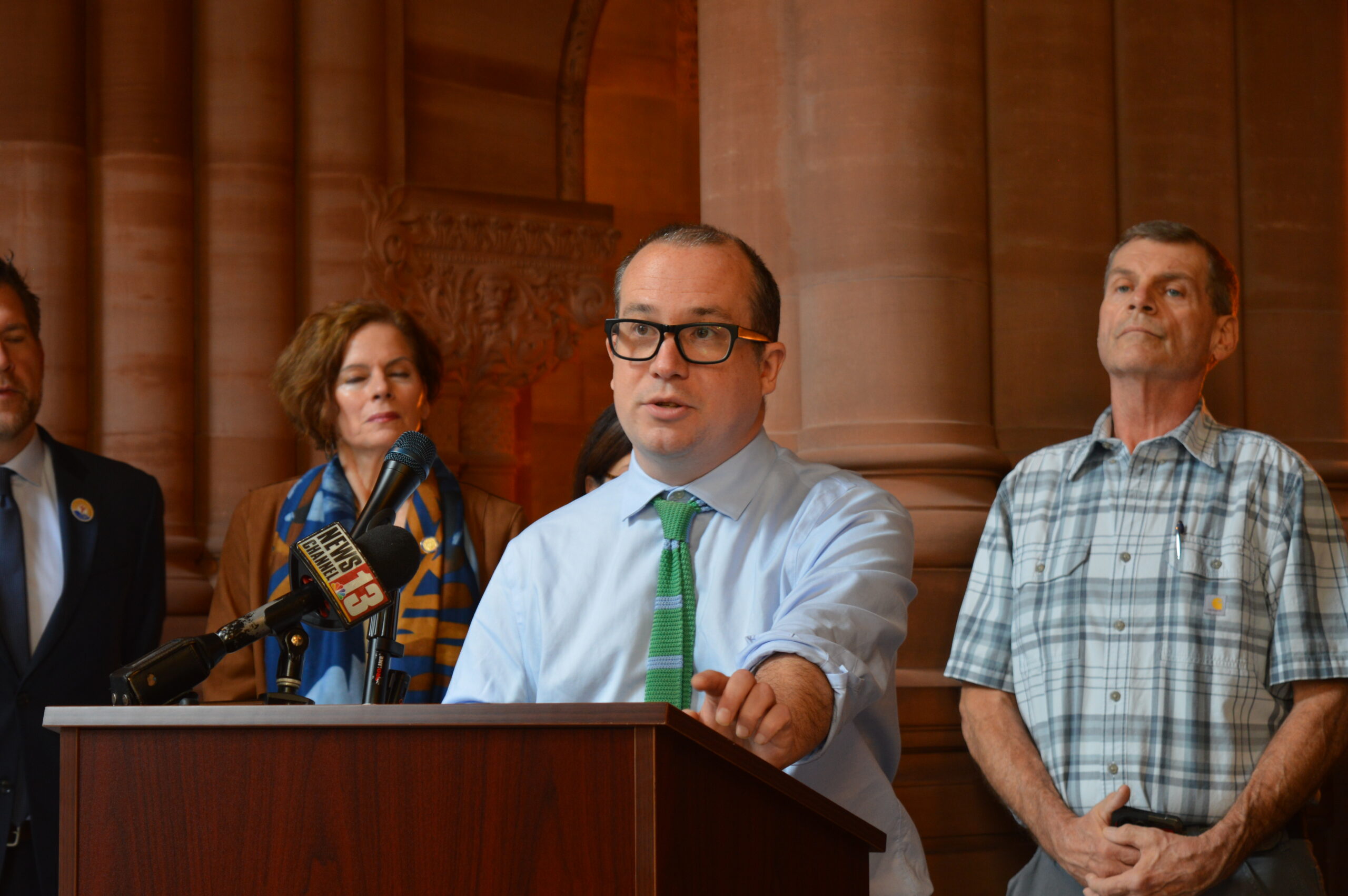
“Families in Buffalo are already struggling to keep up with the cost of groceries, and the last thing they need is more uncertainty about the assistance they rely on to put food on the table,” said Buffalo Mayor Sean Ryan. “Shifting $1.2 billion in SNAP costs onto New York’s state and local governments will put even more pressure on already strained budgets and threaten other essential services our residents depend on. Congress has an opportunity to prevent that from happening before the end of the year. We need a two-year delay to protect families, preserve critical services, and give states the time they need to prepare.”
Fifty-six State Senators and Assembly members sent a similar letter in October, underscoring the need for action during the lame duck session to secure a cost shift delay before state budget negotiations begin in January. The letter, led by Social Services Committee Chairs Senator Roxanne J. Persaud and Assembly member Maritza Davila, also noted the counterintuitive implementation timelines for the cost shift, which vary based on states’ SNAP payment error rates. States with the highest SNAP payment error rates will receive a two-year delay of the cost shift, while states with lower error rates—including New York—will need to pay a share of benefit costs beginning next fall. Extending a two-year delay to all states would level the playing field and allow state and local governments time to prepare for this unprecedented change to SNAP’s funding structure.
“The SNAP provisions in H.R.1 have already begun to directly and negatively impact food-insecure New Yorkers. Further, without a wholesale reversal or a stopgap two-year delay needed from Congress, H.R.1 will also deal an unprecedented $1.2 billion blow to New York State, its counties and local social services districts. I will continue to advocate for a full reversal of H.R.1’s harmful provisions, but absent that possibility, New York State and its 62 counties absolutely need additional time to address this staggering and unconscionable loss of federal funding,” said Senator Roxanne J. Persaud, Chair of the New York State Senate Social Services Committee.
“SNAP is a lifeline for millions of New Yorkers, and shifting billions of dollars in federal costs onto our state and the counties will put additional pressure on already strained budgets. Congress must act before the end of the year to delay this cost shift for all states, giving New York the time and resources needed to protect food assistance without sacrificing other essential services. We cannot allow federal cuts in H.R.1 to undermine the progress we have made in fighting hunger and ensuring that every New Yorker has access to food,” said Assembly member Maritza Davila, Chair of the New York State Assembly Social Services Committee.
“President Trump and Congressional Republicans have made it clear that feeding food-insecure New Yorkers and easing the cost of living are not their priorities. Nowhere is that more evident than in their decision to cut SNAP and shift billions of dollars in program costs onto states and counties. These federal choices impact all of us across New York State, and have added severe strain on local budgets to the point where counties are increasing property taxes by double digits in order to avoid further cuts to local services. Congressional leaders must delay this cost shift to give our state and local governments time to prepare for this indefensible loss of federal funding,” said Senator Michelle Hinchey, Chair of the New York State Senate Agriculture Committee.
“Hunger and food security are not bargaining chips to be used between political parties or as punishment; it is on the federal government to address the damage they’ve created and delay these SNAP cuts before the year is out,” said Senator Patricia Fahy.
“The politics of cruelty continue to go too far as more than 6 million Americans could lose their SNAP benefits under the Big Beautiful Bill—that is 1 of every 5 people enrolled. Enough is enough, and I urge Congress to act swiftly to delay the SNAP cost-shift and protect our children from the officials looking to weaponize hunger for their own benefit.”
“No family should have to choose between paying their bills and putting food on the table. For families across our state, SNAP helps bridge the gap between what families earn and what it actually costs to get by. Strong communities depend on having the resources to meet the needs of their residents,” said Assembly member-elect Chloe Pierce. “SNAP supports local economies and helps strengthen the communities where we live and work. Shifting these costs from the federal government to New York State and its counties will place additional pressure on already strained budgets, ultimately affecting taxpayers and leaving local governments with fewer resources to invest in essential services. Decisions made in Washington should not leave our communities responsible for filling gaps they did not create. Congress must act immediately to delay these changes and protect New York families, counties, and taxpayers from bearing the burden of federal decisions.”
Over the past year, county officials have repeatedly warned of the impacts on county budgets, as New York is one of ten states where counties administer SNAP. H.R.1 already cut federal funding for SNAP administration in half starting in October 2026, straining county social service offices at the same time as the bill’s expanded work reporting requirements have made SNAP more challenging to access and administer. The forthcoming cost shift adds an additional, larger financial burden, cutting a portion of federal funding for actual SNAP benefits and forcing state and local governments to fill the gap.
“At a time when New York families are stretching every dollar to keep up with rising costs, the last thing they need is cuts to food assistance, fewer local services, or higher property taxes,” said Stephen J. Acquario, Executive Director of the New York State Association of Counties.
“Counties are already absorbing millions in new costs to administer SNAP, and the
next federal cost shift threatens to put even more pressure on state and local budgets. These cuts don’t just hurt the families who rely on food assistance—they also threaten local businesses, community services, and taxpayers in every corner of our state. Congress must act before the end of the year to prevent these costs from being passed down to communities that are already struggling to make ends meet.”
Advocates warn of the ripple effects on other state and local investments that support food security. In a letter from more than 160 organizations across the state, advocates urged action before the year ends, stating, “Urgently needed relief for states and low-income families cannot be postponed until 2027. If Congress doesn’t get this done this year, more families could lose necessary food assistance and state leaders will not have the information they need when the legislature meets to work on our next state budget.”
New York advocates have coalesced around a food security agenda for the FY2028 budget that includes investments in SNAP navigators, WIC infrastructure, emergency food programs, and other anti-hunger priorities. Federal cost shifts strain an already tight budget, making it harder to secure state investments despite clear and growing need among New York families.
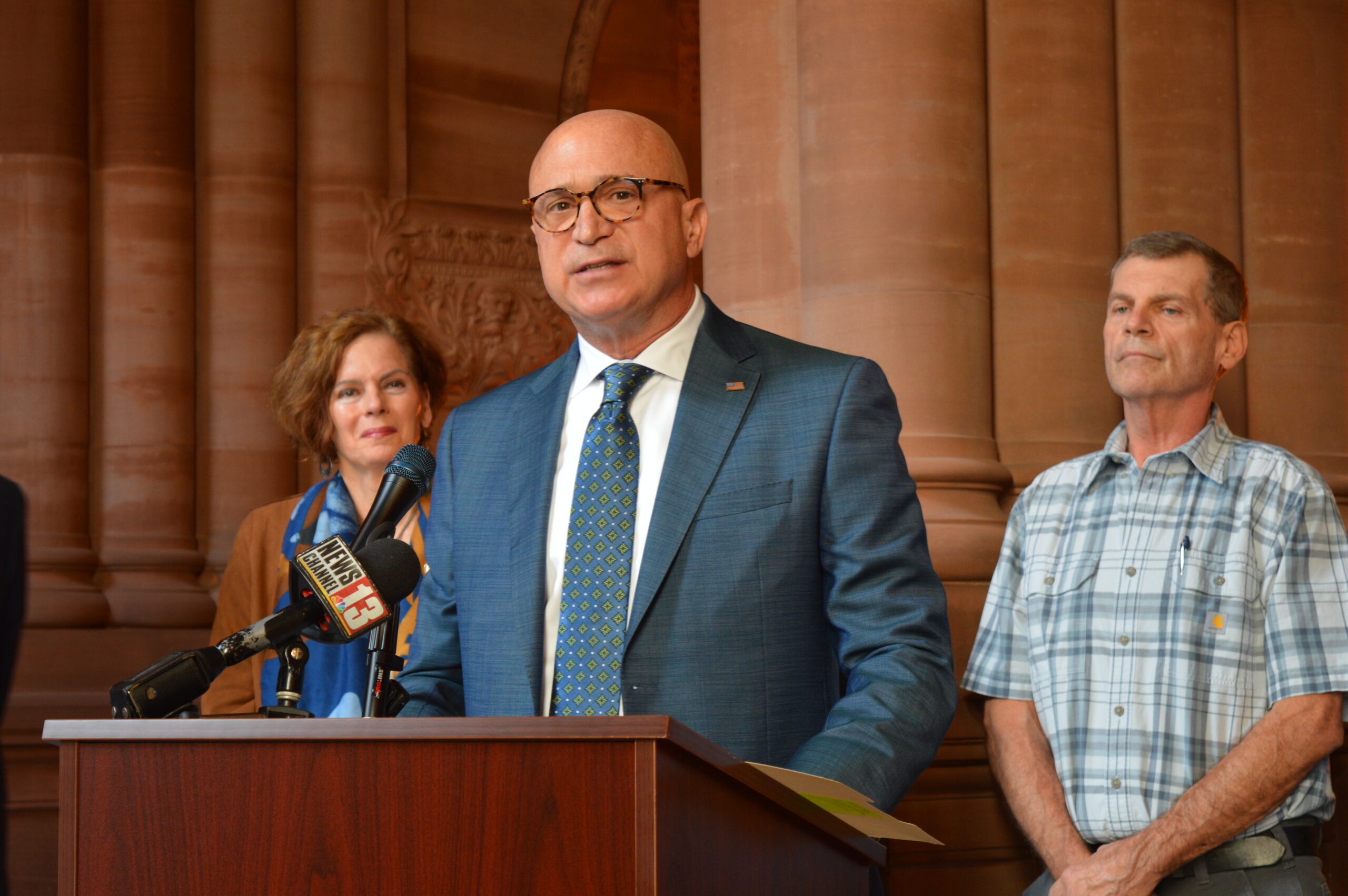
“New Yorkers are struggling to afford food, housing, healthcare, and other basic needs,” said Andrés Vives, Chief Executive Officer of Hunger Solutions New York.
“Our state has made historic investments to provide relief, including universal free school meals and expanded funding for emergency food programs, but more is needed to support food security amid rising grocery costs and federal cuts to
anti-hunger programs. This unprecedented cost shift hamstrings our state and
local governments when New Yorkers are turning to them for help. Congress must extend a two-year delay to all states, giving states equal time to prepare while protecting food access for families.”
While a recent Senate Agriculture Committee Farm Bill included a one-year delay of the cost shift, it offsets the delay with an increase in the amount states will owe in the future. Advocates are clear: Congress must extend a two-year delay to all states without any additional cuts to SNAP to offset the cost. The end-of-year spending agreement—which will need bipartisan support to pass—provides a critical opportunity to do so.
I am text block. Click edit button to change this text. Lorem ipsum dolor sit amet, consectetur adipiscing elit. Ut elit tellus, luctus nec ullamcorper mattis, pulvinar dapibus leo.
Additional Quotes:
“It is essential that Congress restore funds to the USDA’s SNAP program,” said Rye Mayor Josh Nathan. “Shifting the costs to state and local governments was among the many foolish White House decisions contributing to the affordability problem we have in the United States. It’s time to correct that and make sure that no child in America goes hungry.”
“SNAP is a critical resource that helps put food on the table for thousands of local families each month. The proposed SNAP cost shift from the federal government will cause significant challenges not only for state government, but also have ripple effects from the county level down to local household budgets. These changes put pressure on infrastructure and systems that our local neighbors rely on. SNAP is not a program of convenience; for thousands of hardworking individuals, seniors on fixed incomes, and young children in the Capital Region, it remains a lifeline to get them through the month. If federal costs are shifted to the state and benefits are reduced, the impact will be felt immediately. Nonprofits, like United Way, will continue to step up and support our neighbors, but our philanthropic sector alone cannot replace a federal program that serves as one of the nation’s most effective tools for fighting hunger,” said Peter Gannon, Executive Director of the United Way of the Greater Capital Region.
“SNAP cuts have worsened food insecurity statewide. As a result, New Yorkers are turning to our 10 Food Banks and over 4,000 partner food pantries for their nutrition needs, forcing many of these organizations to stretch resources to meet the rising demand. Shifting SNAP costs onto states and counties will cause an unnecessary burden and only further negatively affect our neighbors. We must delay this cost shift, allowing states time to prepare and protect SNAP,” said Elizabeth Cooper, Executive Director of Feeding New York State.